
Student Concerns Subcommittee
Quick Links:
Meet the 2026-2027 Subcommittee Members
Subcommittee Position Descriptions
Contact the Subcommittee
The mandate of the subcommittee includes;
• Identify priorities with respect to issues affecting students
• Advise on student funding programs and assist with adjudication
• Stimulate and facilitate communication among and between students, faculty, and professionals
• Representation on Association initiatives supporting students
• Membership on the Conference and Nominations Committees
• Knowledge sharing through virtual events, website resources, and Conference sessions
This Subcommittee has an extensive mandate as well as programs and initiatives to benefit students which comprise approximately 50% of the Association’s membership. Revisions were therefore implemented (February 2026) to the structure of the Subcommittee’s positions to include multiple perspectives, improve the ability to recruit members, and to ensure that the workload is manageable. The expanded list of positions listed below provide a maximum allowance of members on the Student Concerns Subcommittee in any given year, with the understanding that some positions may not be filled. It is recommended to have at minimum, six (6) positions filled in any given year.
The members of the subcommittee choose the Chair who sits on the Canadian Sociological Association Executive Committee.
| Regional Representatives | Subcommittee and Caucus Representatives |
| Pacific Region (BC) | Black Student Representative |
| Prairie Region (AB, SK, MB) | Decolonization Student Representative |
| Central Region (ON, QC) | Equity Concerns Student Representative |
| Atlantic Region (NB, NL, NS, PEI) | Francophone Student Representative |
| Northern Region (YT, NT, NU, provincial North) | International Student Representative (non-Canadian studying in Canada) |
|
Non-regional Communications Representative |
International Student Representative (Canadian studying outside of Canada) |
2026-2027 Subcommittee Members
The Subcommittee members are excited to continue building an inclusive, supportive, and informed student culture. We welcome ideas and involvement from all sociology students.
Additional positions will be gradually filled by appointment or election beginning in the fall of 2026.
- Nicole K. McNair - Chair/Decolonization Rep
Nicole K. McNair
Pronouns: they/them/any
Education: PhD Candidate (Sociology, McMaster University); Graduate Diploma (Gender & Social Justice, McMaster University); MA (Sociology, McMaster University); BEd (Junior/Intermediate Education, Nipissing University); Hons BA (French and Sociology, McMaster University)
I am very grateful for the opportunity to serve on the CSA Student Concerns Subcommittee. I am passionate about advocating for student concerns, especially for students from equity-deserving groups. As such, I have engaged in student advocacy work with my department Graduate Student Caucus for the past several years. My passion for student and social justice advocacy has been a driving force behind changes I have been working on implementing within my department. I am eager to continue representing students and advocating for their needs as a member of the CSA Student Concerns Subcommittee to have a broader impact with sociology students nationwide.
My research and advocacy work is influenced by decolonial frameworks, Indigenous and abolitionist feminisms, and settler colonial studies. As a white settler with treaty responsibilities, my position with the Student Concerns Subcommittee allows me the opportunity to engage in practical decolonial work while addressing the needs and concerns of students. Through this position, I hope to contribute meaningful and solution-based advocacy that works towards dismantling colonial practices within the institution and improves the experiences of the CSA's student members.
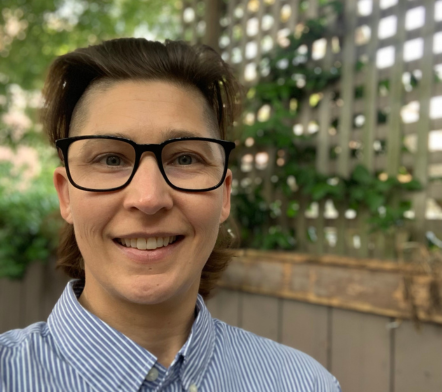
- Emma Nelson - Eastern Canada Rep
Emma Nelson, Dalhousie University
Educational background: BA (English Literature, Montana State University)
MA (English, York University), MES (Environmental Studies, York University),
PhD (Sociology, Dalhousie University) - in progressPronouns: they/them
I am grateful and excited to serve as the Eastern Rep. I am interested in hearing
from other students about the issues they face with equity and opportunity in research in our East Coast context and aim to highlight the important work that students do throughout the early stages of their careers. Please feel welcome to reach out to me at any time.I currently live in the Kjipuktuk in the Sipekne’katik region of Mi’kma’ki, also known as Halifax, Nova Scotia. My early interest in mid- and late 20th century literature developed into a desire to work directly on issues arising from unfettered capitalism. In addition to organizing with the Ontario Coalition Against Poverty and Toronto Against Fascism, I obtained a Master of Environmental Studies with a focus in Urban/Community Planning and Environmental Education for which I produced a podcast exploring the ways settler-identified people in the planning field understand and make use of land acknowledgments in their land-based
work. These experiences serve as the foundation for my anti-colonial approach in research contexts.During COVID, my partner and I moved to the North Shore of Nova Scotia, where we co-owned and operated a bakery for 4 years before returning to school in 2025. My current research interests lie in the professionalization of birth and death workers as well as rites of passage and (de)medicalization.
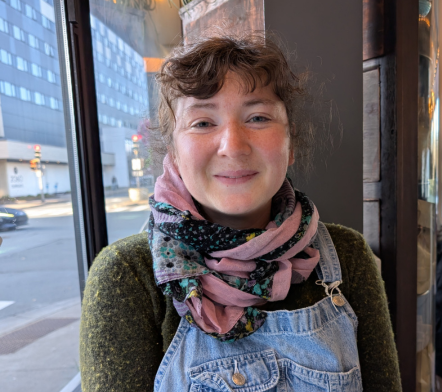
- Sara Hormozinejad - Central Canada Rep
Sara Hormozinejad, University of Toronto
Education: PhD Candidate (Sociology; University of Toronto), MA (Anthropology; University of Toronto), BA (Anthropology; University of Calgary)
I am grateful to serve as the Central Canada Representative on the CSA Student Concerns Subcommittee. I have been an active member of the CSA since 2021 and joined the subcommittee in 2024 with the goal of helping improve the experiences of student members. I look forward to connecting with fellow students, understanding their experiences as CSA members, and advocating for their concerns.
I am currently a PhD Candidate in sociology at the University of Toronto and a researcher at the Global Migration Institute at Toronto Metropolitan University. Throughout my academic journey, I have actively engaged in conversations about issues that concern students, including evolving discussion around EDI and the growing role of AI. I have recently served as a student member on the Ad-Hoc Committee for AI in Grad Education and on the Anti-Racism and Equity Committee at the UofT Department of Sociology, where I have represented graduate students and advocated for their concerns. I am also an active member of the working group on Activism in the Reflexivities in Migration Studies Standing Committee at IMISCOE.
I am committed to bringing my advocacy experience to the CSA to represent students, particularly those from Central Canada. Please feel welcome to reach out to me with any questions or concerns.

- Md. Nazmul Arefin - Western Canada Rep
Md. Nazmul Arefin, University of Alberta
Pronouns: he/him
Nazmul Arefin is a PhD candidate and Killam Scholar in Sociology at the University of Alberta, Canada. He is also an ex-Fellow of the University of Kassel, Germany, where he served as a Visiting Scientist. Currently, Nazmul works as a research coordinator on a National Dorothy Killam Fellowship project focused on BIPOC officials in the Canadian Criminal Justice System. Demonstrating his academic leadership, Nazmul served as President of the Sociology Graduate Students' Association (SGSA) at the UAlberta and is involved with the Canadian Association for the Study of Islam and Muslims (CASIM).
Nazmul is bilingual in Bengali and English. Arefin’s doctoral research investigates the lived experiences of Muslim people and Muslim university students in Canada, addressing the rising climate of Islamophobia and right-wing extremism. His work seeks to provide vital data and grassroots policy recommendations for the nationwide effort to combat Islamophobia.
Nazmul’s academic achievements have been recognized with several prestigious awards, including the GSA International Student Award (2025), the Dorothy J. Killam Memorial Graduate Prize (2024), the ASC-DIC Best Student Paper Award (2024), and the Izaak Walton Killam Memorial Scholarship (2024), among many others. He has presented his research at major conferences, including the American Society of Criminology and the International Sociological Association (ISA). A dedicated member of the CSA, Nazmul presented his research at the CSA Congress in 2023 and 2024 and received the Congress Graduate Merit Award in 2023.
Driven by a commitment to advancing equity, evidence-based policy, and inclusive academic dialogue, Arefin seeks to contribute to the subcommittee by leveraging his research experience and global south insights into issues of ensuring EDID and social justice. His dedication to fostering critical scholarship and supporting diverse voices aligns with the CSA’s mission to promote sociological excellence and social justice in Canada’s multicultural context.

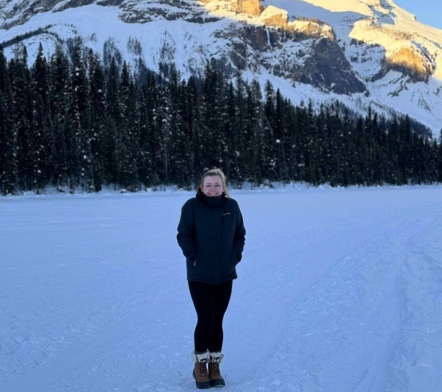
- Janaya Davis - Communications
Janaya Davis, Athabasca University
BA (Sociology – Current; Athabasca University), Dip. (Justice Studies, Red Deer Polytechnic)
Language Proficiency: English (Fluent), French (Intermediate)
I am excited to serve as the Communications Representative on the CSA’s Student Concerns Subcommittee. I am currently in my fourth year of a BA in Sociology at Athabasca University, with plans to pursue a Master’s and PhD. I have a profound admiration for sociology; my mission as Communications Rep is to make the discipline intellectually alive and accessible for students across Canada. I look forward to amplifying diverse peer voices, strengthening national networks, and bridging the gap between social theory and real-world issues.
My studies focus on comparative historical sociology, specifically examining war, state formation, and religion within the Middle East and North Africa (MENA) region. I am deeply committed to postcolonial frameworks and recovering the contributions of historically overlooked scholars, bringing a rigorous commitment to nuance when studying conflict and power. This academic trajectory is uniquely grounded by a diploma in Justice Studies and practical experience working on the frontlines of addiction and structural homelessness. I bring this blend of theoretical dedication and real-world perspective to the subcommittee, and I warmly invite student members to connect and collaborate.
Subcommittee Position Descriptions
Pacific Region (BC), Prairie Region (AB, SK, MB), Central Region (ON, QC) and Atlantic Region (NB, NL, NS, PEI):
- Student representative must be enrolled in an academic institution located within the specified region at the beginning of the elected term.
- If the student representative relocates outside of the specified region during their term, the Student Concerns Subcommittee will determine collectively if the student representative shall maintain their position (factors to be considered include whether the student representative continues to maintain connections with the specified region).
- Student may be a Canadian citizen or an international student living in Canada.
- Student representative will act on behalf of the specified region to express concerns, support needs and amplify voices, to the best of their ability.
Northern Region (YT, NT, NU, provincial North):
- Student representative must be enrolled in an academic institution located within the specified region at the beginning of the elected term or have community connections within the specified region (either familial and/or community-engaged research connections).
- Provincial North includes northern parts of provinces that are generally inhabited by higher numbers of Indigenous peoples.
- If the student representative relocates outside of the specified region during their term, the Student Concerns Subcommittee will determine collectively if the student representative shall maintain their position (factors to be considered include whether the student representative continues to maintain connections with the specified region).
- Student should identify as Inuit, First Nations and/or Métis and/or be a Canadian citizen.
- Student representative will act on behalf of the specified region to express concerns, support needs and amplify voices, to the best of their ability.
Communications Representative:
- Student representative must be enrolled in an academic institution located within Canada.
- Student may be a Canadian citizen or an international student living in Canada.
- Student representative will be primarily responsible for overseeing the Student Concerns Subcommittee email and social media account(s), newsletters, and HSS Commons account.
- Student representative can choose to take on additional duties specific to the Student Concerns Subcommittee, if desired, but it is not mandatory.
Black Student Representative:
- Student must identify as Black.
- Student representative must be enrolled in an academic institution located within Canada.
- Student may be a Canadian citizen or an international student living in Canada.
- Student representative will act on behalf of the CSAs Black student membership to express concerns, support needs and amplify voices, to the best of their ability.
- Student representative should communicate with the Black Caucus and act as a liaison between the Student Concerns Subcommittee and the Black Caucus to best address needs of the CSA Black student membership.
- Student representative may hold a formal role within the Black Caucus if desired, but it is not mandatory.
Decolonization Student Representative:
- Selection of this Student Representative position will adhere to the same membership requirements as the Decolonization Caucus positions.
- Student representative must be enrolled in an academic institution located within Canada.
- Student representative will act on behalf of the CSAs Indigenous student membership to express concerns, support needs and amplify voices, to the best of their ability.
- Student representative should communicate with the Decolonization Caucus and act as a liaison between the Student Concerns Subcommittee and the Decolonization Caucus to best address needs of the CSA Indigenous student membership.
- Student representative may hold a formal role within the Decolonization Caucus if desired, but it is not mandatory.
Equity Concerns Student Representative:
- It is preferred that this student identify as a person from an equity-deserving group and/or be engaged in research with a strong focus on equity-deserving groups.
- According to the CSA Principles on Equity, this includes members of historically marginalized groups, including Indigenous peoples, racialized persons, persons with disabilities, persons who identify as women and/or Lesbian, Gay, Bisexual, Transgender, Queer, and or Questioning, Intersex, Asexual, Two-Spirit (LGBTQIA2S+).
- Student representative must be enrolled in an academic institution located within Canada.
- Student may be a Canadian citizen or an international student living in Canada.
- Student representative will act on behalf of the CSAs student membership at large to express concerns, support needs and amplify voices related to equity issues, to the best of their ability.
- Student representative should communicate with the Equity Subcommittee and act as a liaison between the Student Concerns Subcommittee and the Equity Subcommittee to best address needs of the CSA student membership.
- Student representative may hold a formal role within the Equity Subcommittee if desired, but it is not mandatory.
Francophone Student Representative:
- Student must identify as francophone.
- Student representative must be enrolled in an academic institution located within Canada.
- Student may be a Canadian citizen or an international student living in Canada.
- Student representative will act on behalf of the CSAs francophone student membership to express concerns, support needs and amplify voices, to the best of their ability.
- Student representative should communicate with the Francophone Affairs Caucus and act as a liaison between the Student Concerns Subcommittee and the Francophone Affairs Caucus to best address needs of the CSA francophone student membership.
- Student representative may hold a formal role within the Francophone Affairs
- Subcommittee if desired, but it is not mandatory.
International Student Representative (non-Canadian studying in Canada):
- Student must identify as an international student.
- Student representative must be enrolled in an academic institution located within Canada.
- Student representative will act on behalf of the CSAs international student membership living and studying in Canada to express concerns, support needs and amplify voices, to the best of their ability.
International Student Representative (Canadian studying outside of Canada):
- Student must identify as a Canadian citizen.
- Student representative must be enrolled in an academic institution located outside of Canada.
- Student representative will act on behalf of the CSAs Canadian student membership living and studying abroad to express concerns, support needs and amplify voices, to the best of their ability.